Water Spirits of Kurisches Haff
The Curonian Lagoon sits enclosed between the dunes and the open Baltic, neither river nor sea. The beings fishermen described here do not appear in standard compilations of Baltic mythology.
The Curonian Lagoon — Kurisches Haff in German, Kuršių marios in Lithuanian — is one of the stranger bodies of water in Europe. It is separated from the open Baltic by a narrow spit of sand dunes, some of which are among the largest in Europe. The water inside the lagoon is brackish, fed by the Nemunas river on one end and by the sea at both ends of the spit. In summer it is shallow and warm. In winter it can freeze solid enough to drive a cart across.
Fishing communities existed on both sides of the spit and around the lagoon's perimeter for centuries. Their folklore about the water they worked on diverges, in interesting ways, from the coastal folklore that has been more thoroughly documented.
The problem with enclosed water
Most Baltic water spirit traditions involve the open sea or rivers. The sea's spirits are large, unpredictable, connected to weather and storms. River spirits are more locally bounded, associated with specific crossings or mills. The lagoon didn't fit either category neatly, and the folk belief that developed around it reflects this.
The beings described in the lagoon accounts tend to be smaller and more specific than sea spirits, but less tied to a single location than river spirits. Several accounts describe something that moved across the lagoon at night — not a spirit that lived somewhere, but one that passed through. The fishing communities used a Lithuanian term that translates approximately as "the walker on water," though the German accounts from the same period describe something similar using no particular name, just the phrase "what goes across."
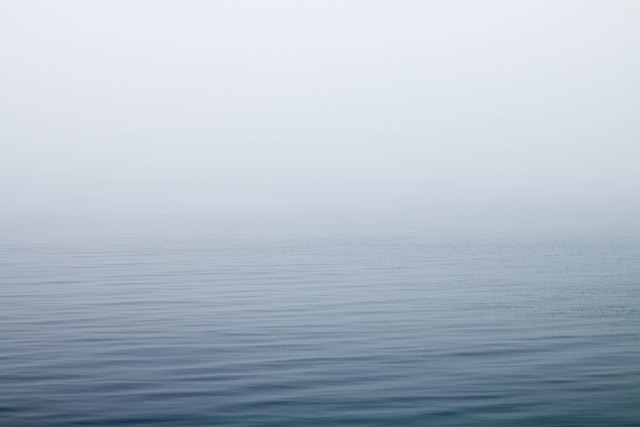
You see it when the mist comes in off the sea side. It doesn't go through the mist. It goes along the top of it, at the surface of the water. You don't look at it directly. You see it from the corner of your eye.
What the accounts have in common
Looking across forty or so accounts collected between 1880 and 1960 from different points around the lagoon, several details recur with unusual consistency. First, these entities appear specifically in transitional weather — not in storms, not in clear conditions, but in the grey period between them when fog or mist is present. Second, they are described as neither threatening nor helpful but simply present, in a way that is described as uncomfortable. Third, direct eye contact is consistently warned against across accounts from communities that had no obvious contact with each other.
This consistency across geographically separated communities is worth noting. When the same specific detail — avoid direct eye contact — appears in German accounts from the western lagoon shore, Lithuanian accounts from the eastern shore, and later accounts collected from communities displaced westward after 1945, it starts to suggest something more than coincidence. Either the tradition spread very thoroughly across a fractious linguistic border, or the detail reflects something in the actual experience of working that particular body of water in poor visibility.
The flooding accounts
A separate category of lagoon belief concerns what happens when the water level rises unusually — which happens when strong westerly winds push Baltic water through the spit. Several accounts describe beings that come inland with the flooding water and return with it when the water recedes. These are described more negatively than the lagoon-crossing entities: they are said to be responsible for the disorientation that people experienced after flood events, the sense of not knowing where you were even in familiar territory.
This is interesting because flood disorientation is a documented psychological phenomenon — the landscape looks genuinely different after a flood, boundaries have moved, familiar landmarks are submerged or covered in silt. The folklore, in this case, has given a specific agency to an actual experience. Whether this makes it more or less interesting as folklore depends on what you think folklore is for.
A note on the archives
Most of the material I am drawing on here was collected by German ethnographers in the late nineteenth and early twentieth centuries, working in communities that were predominantly Lithuanian-speaking but that also included German-speaking families. The collection is held in Kiel, which is how I first encountered it. Part of the same material was collected independently by Lithuanian ethnographers in the 1920s and 1930s, working from the other side of the linguistic boundary, and held in Vilnius. The two collections overlap in content but diverge in framing — the German accounts tend to describe these beliefs as superstitions that are dying out; the Lithuanian accounts treat them as living traditions. Both were collected at almost the same time, from communities living within a few kilometres of each other.