The Amber Coast Riddle
What the coastal communities between Sambia and Rügen made of the golden resin that washed up after storms — and why their explanations differ so sharply from one another.
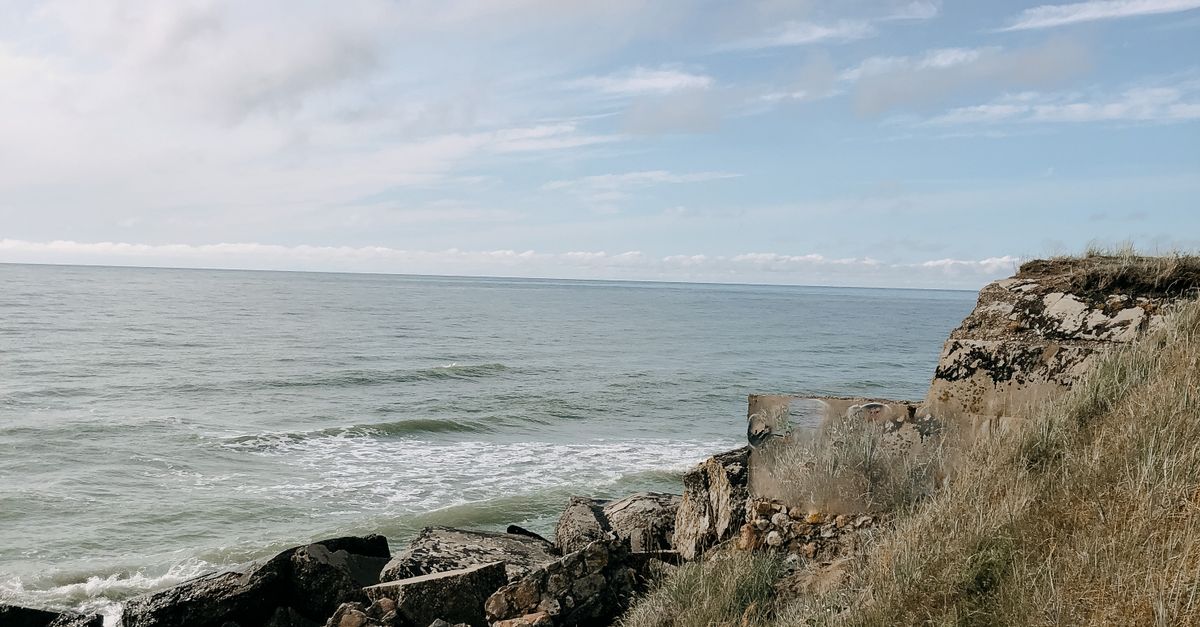
After a storm, the beaches between Liepaja and Rügen change colour. The sand picks up a warmth it doesn't normally have, and if you know what you're looking for, you find small translucent pieces the colour of weak tea. In good years — after particularly rough November seas — the pieces are larger. Some are the size of a thumb. Occasionally, there is something inside one: a trapped fly, a bubble, a fragment of leaf.
The people who lived along this coast for centuries didn't know what amber was in any geological sense. They knew that it came from the sea after storms. They knew it burned. They knew it smelled like pine when you held it in a flame. And they built explanations for it that tell you a great deal about how they thought about the sea.
Three explanations, geographically distributed
The Latvian and Lithuanian traditions that German ethnographers collected in the 1880s and 1890s are remarkably consistent on one point: amber is the solidified tears of a supernatural being. The specific being changes — sometimes it is Jūratė, a sea goddess punished by the thunder god Perkūnas for loving a mortal fisherman; sometimes it is simply described as the daughters of the sun, weeping at the horizon. The emotional logic is the same in each case. Something sorrowful happened at the edge of the sea, and the amber is the residue.
The German Pomeranian tradition is different and somewhat more practical. In several collected accounts from the Rügen area, amber is described as the hardened resin of trees that once grew on land now submerged beneath the Baltic. This is, in fact, closer to the geological truth — amber is fossilized tree resin — and there is genuine submerged forest beneath parts of the Baltic. Whether anyone actually observed the submerged trees or whether this is a reasoned inference from the pine smell when amber burns, the records don't say.
The amber comes from beneath the water, where the old trees still stand. In certain lights, at certain depths, you can see them. But if you try to swim down to look, you do not come back.
The third tradition, less commonly cited, comes from the Sambian coast of what is now the Kaliningrad region. Here amber was described not as tears or as resin but as sunlight that had fallen into the sea and solidified. This version has no emotional narrative attached to it. It is almost geological in its own way — a natural process, not a punishment or a grief. Sun falls into water. Sun hardens. Sun washes up on beach. This version may be older than the others; it appears in fewer sources, and the sources it does appear in tend to be earlier.
Why the explanations differ
The geographic distribution is not random. The weeping-woman tradition appears strongest in areas of Lithuanian and Latvian cultural influence — communities where the sea was more often female, and misfortune was more often the result of divine jealousy or transgression. The submerged-forest tradition appears in areas where German fishing communities had more practical relationships with the sea, and where the economic value of amber was highest. The sunlight tradition appears where the coast is sunniest in summer — which is to say, further east and south, where the continental climate pushes August temperatures high enough to make the contrast with winter storms dramatic.
None of this is deterministic. These are tendencies, not rules. You find variants everywhere. But the pattern is clear enough that it seems meaningful.
What the amber was actually used for
Along most of this coast, amber had two uses before it became a trade commodity. First, it was burned as incense in domestic settings — the pine smell was considered pleasant and possibly protective. Second, pieces with natural holes or unusual shapes were worn as amulets. The specific protective properties varied by community, but they were consistently described as related to the sea: amber was supposed to protect against drowning, against storms, against things that came from the water.
This is worth noting because it cuts against the sentimentalized version of amber you find in tourist writing, which tends to treat it as simply beautiful and valuable. Along the coast it was used, and the use was defensive.
A single detail worth keeping
One of the stranger details in the Latvian material appears in an account collected near Ventspils in 1887. The informant, a fisherman's widow, described a custom of throwing small pieces of amber back into the sea after storms, as a kind of return payment. She said this was done so that the sea would continue to give amber in future years. She was uncertain whether this was actually efficacious. She said her mother had done it, and her grandmother, and she did it too, but she wasn't sure it made any difference.
What's interesting about this account is not the custom itself — reciprocal exchange with natural forces is common across many traditions — but the informant's stated uncertainty. She performed the ritual without being confident it worked. This is the kind of detail that standardized folklore collections tend to omit in favour of cleaner narratives, and it matters: it suggests that the people who maintained these traditions were not necessarily more credulous than we are. They were doing something that had always been done, in the face of conditions that had always been uncertain.
Email updates
New journal entries by email, when they appear. No particular schedule.